
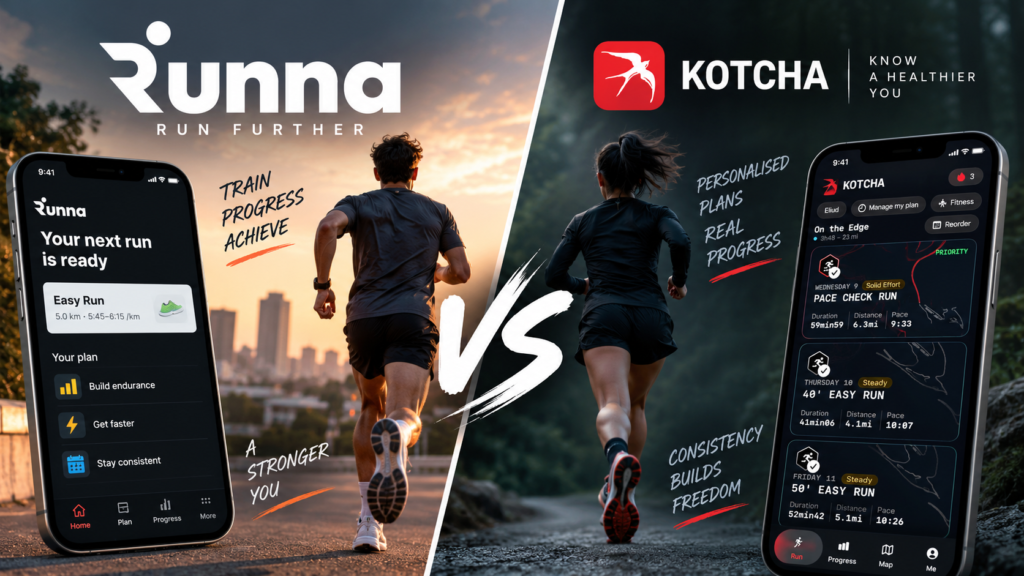
There are now more running apps than ever, and most of them promise some version of the same thing: tell them your goal, follow their training plan, and become a better runner. On the surface, Runna and Kotcha look like they belong in exactly the same category. Both build personalized training plans, both work with running watches, both can train you for everything from a 5K to a marathon, and both are trying to replace the need for a traditional running coach.
But the more I looked at the two, the more I realized that they are actually approaching the same problem in very different ways.
Runna has established itself as one of the biggest names in digital running coaching. It has training plans for beginners, experienced runners, race-specific goals and even ultra distances, along with strength training, device integrations and a much broader overall running ecosystem. Kotcha is the newer challenger, but its proposition is much more focused: it is built around an adaptive coaching system influenced by Eliud Kipchoge and Kilian Jornet, with the training plan changing according to your actual performance and life rather than simply asking you to follow a fixed schedule.
That makes this a much more interesting comparison than simply asking which app has more features. The real question is: which one is better at coaching you?
After spending time comparing how both platforms approach training, who they are actually built for, and where each one is strongest, I think there is a fairly clear answer.
Runna Has Had More Time to Build the Complete Product
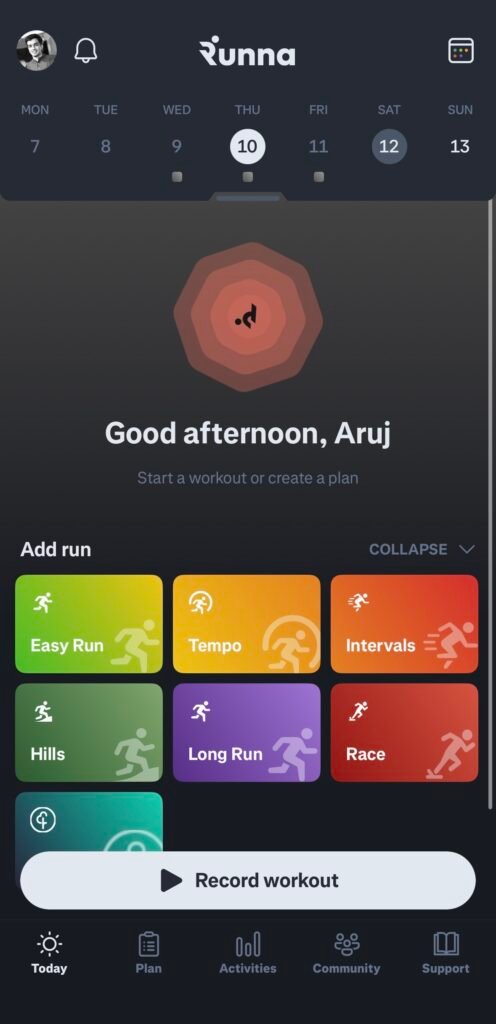
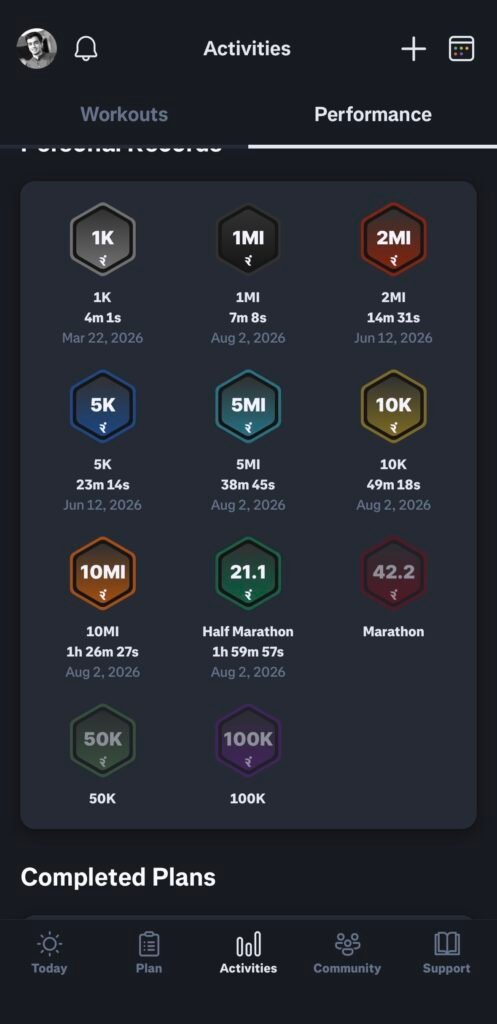
The first thing that stands out about Runna is how mature the product feels. It has been designed to accommodate a very wide range of runners, so you can enter the app as someone who has never run before, someone coming back after a break, someone preparing for a first half marathon, or an experienced runner trying to hit a new marathon PB. Its current plans cover distances from 5K through 50K, and custom plans can be built around a particular race, distance, experience level, mileage and schedule.
Runna has also put considerable effort into making running feel like part of a broader training routine rather than a collection of isolated runs. Alongside the running plan, you can add strength training, yoga, Pilates and stretch and stability work, with the strength program itself configurable around your ability, goals, available equipment, session duration and preferred training days. That matters because getting faster isn’t simply about running harder every week, and Runna has clearly tried to account for the wider picture.
The app is also extremely good at reducing the amount of thinking you need to do before a workout. Once your plan is created, each run comes with clear instructions and a defined purpose, while supported watches such as Garmin and Apple Watch can take those workouts directly onto your device. Runna also supports Fitbit, COROS and other integrations, as well as Strava. If what you want is a polished running system where most of the decisions have already been made for you, Runna has a very strong advantage.
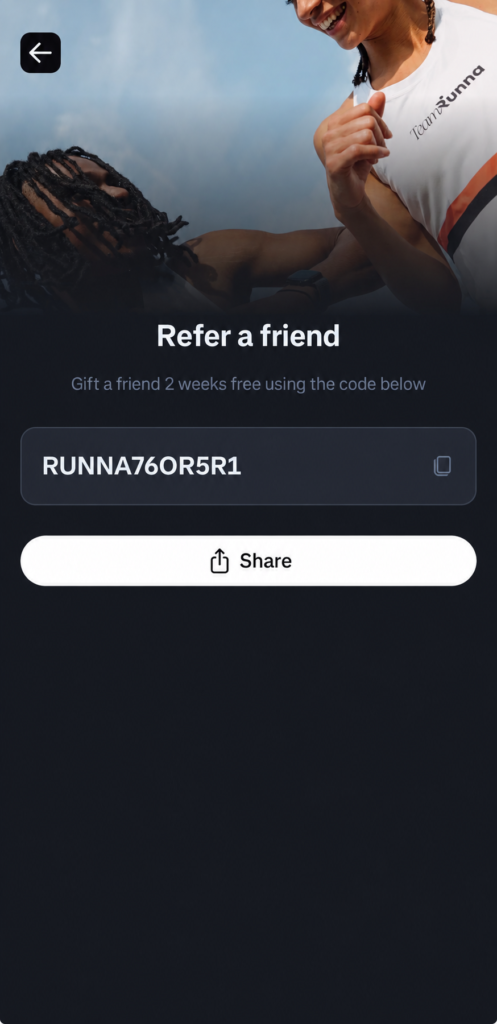
Enter code RUNNA76OR5R1 to get a 2 week free trial on Runna.
But Kotcha Is Built Around a Different Philosophy
Kotcha’s biggest difference is that it doesn’t seem particularly interested in becoming the running app with the largest collection of features. Its entire proposition is built around adaptive coaching and the methodology behind elite endurance training.
Kotcha was developed with Eliud Kipchoge and Kilian Jornet as athlete co-founders, bringing together Kipchoge’s marathon expertise and Jornet’s approach to endurance and mountain running. The company’s current system is built around five main ideas: structuring the season so you peak at the right time, adapting training to your real-world performance, integrating strength and conditioning, incorporating race-day fueling, and prioritizing consistency over simply adding more intensity.
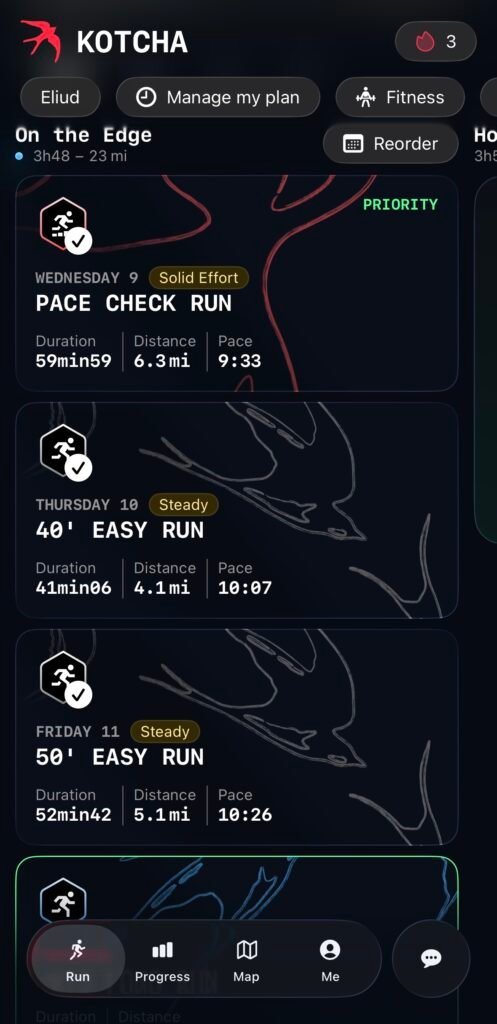
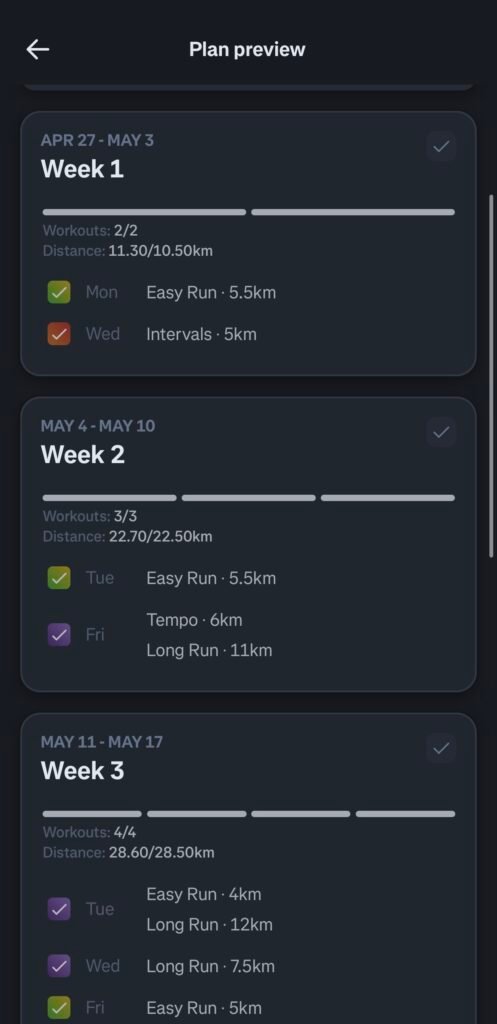
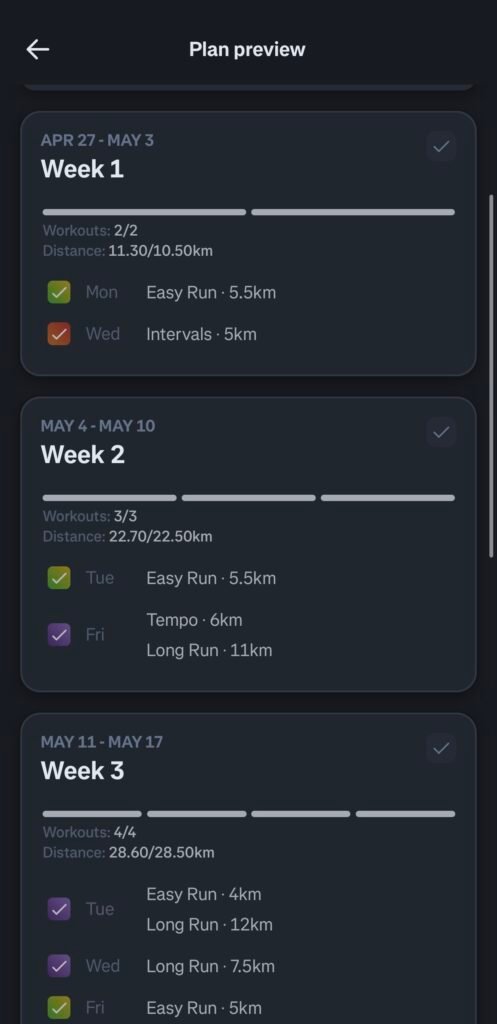
The important part for me is the emphasis on adaptation. Kotcha says that your paces and workouts are updated based on your actual performance rather than relying on a rigid template. Its plans can be created for 5K, 10K, half marathon and marathon goals, from four weeks to six months, and they are designed around your body, your current pace and the specific goal you are working toward.
That sounds like a small distinction, but it changes the role of the app. Instead of thinking of Kotcha as a digital version of a training calendar, it makes more sense to think of it as an attempt to create a digital coach that keeps reassessing what you need.
Enter code ARUJ to get one month free on Kotcha.
This Is Probably the Biggest Difference Between Runna and Kotcha
Runna gives you a tremendous amount of structure, but it also gives you meaningful control over that structure. You can adjust your plan, move your training around your calendar, change preferences and choose how much running and strength training you want to incorporate. Runna’s current system is explicitly designed to adapt to performance and give you tools to modify the plan when your circumstances change.
Kotcha takes a slightly different approach. Its philosophy is less about giving you a training plan that you can constantly manipulate and more about having the system itself respond to what is happening. If your recent runs suggest that your fitness is changing, the next training block can change with it. That is particularly interesting for runners who don’t want to spend their time wondering whether they should move a session, increase the pace or change the volume.
In other words, Runna gives you more ownership over the plan, while Kotcha tries to take more of the coaching decisions off your plate. Neither philosophy is inherently better. It depends on how much you want to understand and control the process yourself.
For Beginners, I Would Probably Pick Runna
One of the biggest improvements Runna has made recently is its focus on beginners. In January 2026, the company relaunched its New to Running and Return to Running plans specifically around the problems that make people quit early: lack of confidence, poor consistency and doing too much too soon. The New to Running program can now run from six to sixteen weeks and begins with time-based walk-run sessions before progressing toward distance-based running. The plans can also be adjusted when you miss workouts or need more time.
That matters because a beginner doesn’t necessarily need the most sophisticated coaching engine in the world. They need a system that gives them confidence and makes the process feel manageable. Runna has clearly invested in making that first phase of the journey less intimidating, and it has the range of plans and support needed to keep someone progressing after they finish that initial 5K goal.
Kotcha can also be used by newer runners, and it currently offers plans beginning at 5K, but I think the personality of the product is more naturally aligned with someone who already sees themselves as a runner and now wants to get better. For someone who is putting on running shoes for the first time, I would still point them toward Runna.
Enter code RUNNA76OR5R1 to get a 2 week free trial on Runna.
When You Start Taking Running Seriously, Kotcha Becomes Much More Interesting
The comparison changes once you already have a decent running base.
If you’re running three or four times a week, have completed races before, and you’re now thinking about improving your 10K time, breaking two hours in the half marathon, or finally getting a marathon PB, I think the philosophy behind Kotcha becomes much more compelling.
The reason is that serious training is not simply a matter of adding harder workouts. The difficult part is knowing when to push, when to recover, how to build toward a peak, and how to make changes when your body isn’t responding exactly as expected. Kotcha’s entire system is built around that idea. Its training cycles include build, intensity and taper phases, while its system monitors performance and adjusts workouts rather than treating the original plan as something that can never change.
I also like that Kotcha has made strength and conditioning part of the core training philosophy rather than treating it as an optional extra. The company says its strength work is integrated into the plan and includes drills informed by Kipchoge’s own training, while race-day fueling is also built into the system. That gives Kotcha a more holistic feel if your objective isn’t simply to run more kilometres, but to improve your overall performance.
Enter code ARUJ to get one month free on Kotcha.
The Watch Experience Is Important Too
For me, any serious running app needs to work well with a watch because I don’t want to keep looking at my phone during a workout.
Runna has a strong advantage here because its integrations are well established. The company supports Apple Watch, Garmin, Fitbit, COROS and others, while Runna workouts can be synced to compatible watches so that the workout instructions, intervals and pacing guidance are available while you’re running.
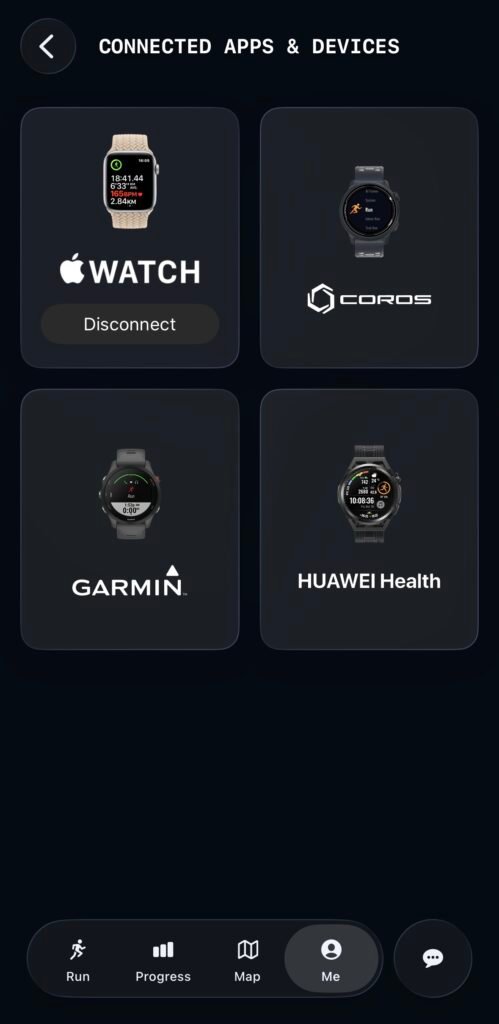
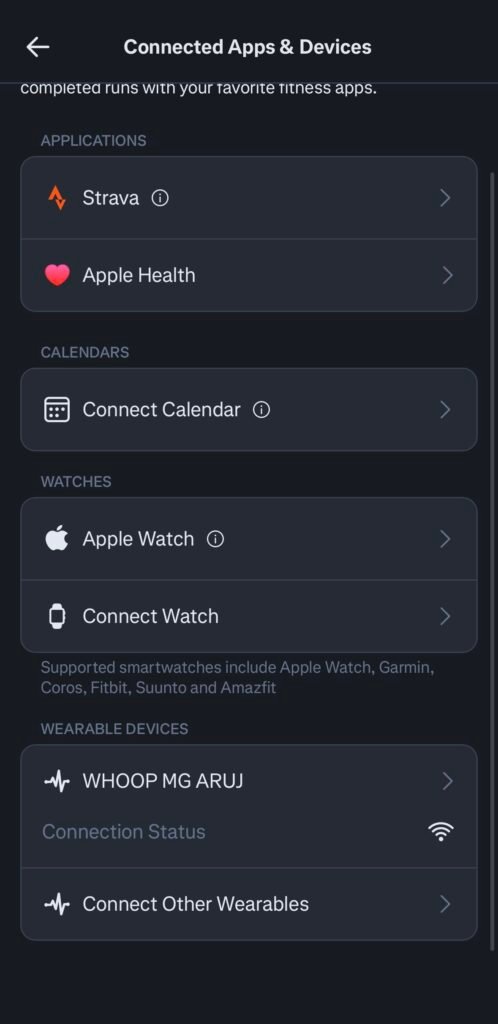
Kotcha also supports integrations with Garmin, Apple, Huawei, COROS and Strava. So this isn’t a situation where one app works with modern running hardware and the other doesn’t. Both understand that a training plan is much more useful when it follows you onto your wrist.
The difference is more about the ecosystem around those integrations. Runna has had longer to develop this experience and currently has the broader ecosystem, while Kotcha is more focused on making the adaptive coaching itself the centre of the product.
Which One Gives You Better Training?
This is where I think the answer becomes more personal.
If you define “better training” as having a very polished plan that clearly tells you what to do, gives you a variety of options, works across your devices and lets you adjust the schedule around your life, then Runna is probably the better product. Its plans are extremely structured, its workouts have clear purposes, and the system gives you plenty of control over how the plan fits into your week.
But if you define better training as having a coach that constantly looks at how you’re responding and tries to adjust the next step accordingly, I would lean toward Kotcha. Its central promise is specifically built around performance-based adaptation, and the fact that the product was developed around the training methodologies of Kipchoge and Jornet gives it a very specific coaching identity.
This is why I don’t think it’s fair to say that one is simply more advanced than the other. They’re optimizing for different things.
Pricing & Free Trial
Runna currently lists its premium plan at $19.99 per month or $119.99 per year, with a seven-day free trial, while it also offers two free 5K plans for people who want to get started without subscribing.
Kotcha costs €14.99 per month or €119.99 per year, with the annual plan working out to around €10 per month.
For me, though, the subscription price isn’t the deciding factor because you’re paying for something much more valuable than a run tracker. The whole point of these services is to save you from having to design your own training, figure out your weekly structure and constantly wonder whether you’re progressing correctly. If one of the apps gets you to the start line fitter and healthier, the difference in subscription cost becomes fairly insignificant.
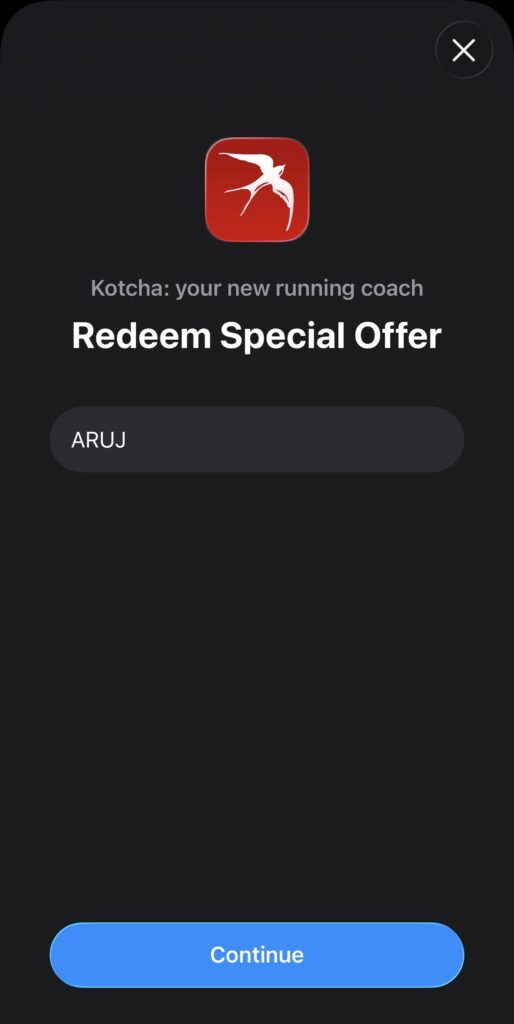
For Kotcha, use the code ARUJ to get a 1 month free trial.
For Runna, use the code RUNNA76OR5R1 to get a 2 week free trial.
Conclusion
After comparing the two, I think Runna is the better overall running app, while Kotcha is the more interesting coaching product.
Runna has the advantage in maturity, breadth and versatility. It works for beginners through experienced runners, offers a wide range of training goals, integrates with almost everything you’d expect, and now includes strength and other complementary training alongside running. If you told me I could recommend only one running app to the average runner without knowing anything else about them, I’d probably choose Runna because it’s the safer all-round recommendation.
But personally, if someone came to me and said, “I already run regularly, I have a specific race goal, and I want the closest thing I can get to having a serious coach who keeps adjusting my training,” I’d point them toward Kotcha.
That’s because its entire product has been built around the coaching problem rather than the app problem. The involvement of Eliud Kipchoge and Kilian Jornet isn’t just there for marketing; Kotcha has built its training philosophy around the principles it says came from working directly with them, including periodization, adaptation, strength, fueling and consistency.
So my final answer is pretty simple: Runna is better for most runners, but Kotcha is the one I’d choose for serious performance focused training.
The good news is that you don’t have to make that decision based on my opinion.
Try Runna and Kotcha Yourself
I’ve got offers for both apps that give you enough time to properly test the coaching instead of doing one run and deciding whether you like the interface.
For Kotcha, use the code ARUJ to get a 1-month free trial.
For Runna, use the code RUNNA76OR5R1 to get a 2-week free trial.
I’d actually recommend using both for a while and paying attention to how they handle the same thing: your training. See which one gives you workouts that make sense, which one adapts better when your week gets messy, and which coaching style you naturally find yourself trusting.
Because ultimately, the best running app isn’t the one with the longest feature list. It’s the one that makes you more likely to follow your training and, six or twelve weeks later, makes you a better runner.