
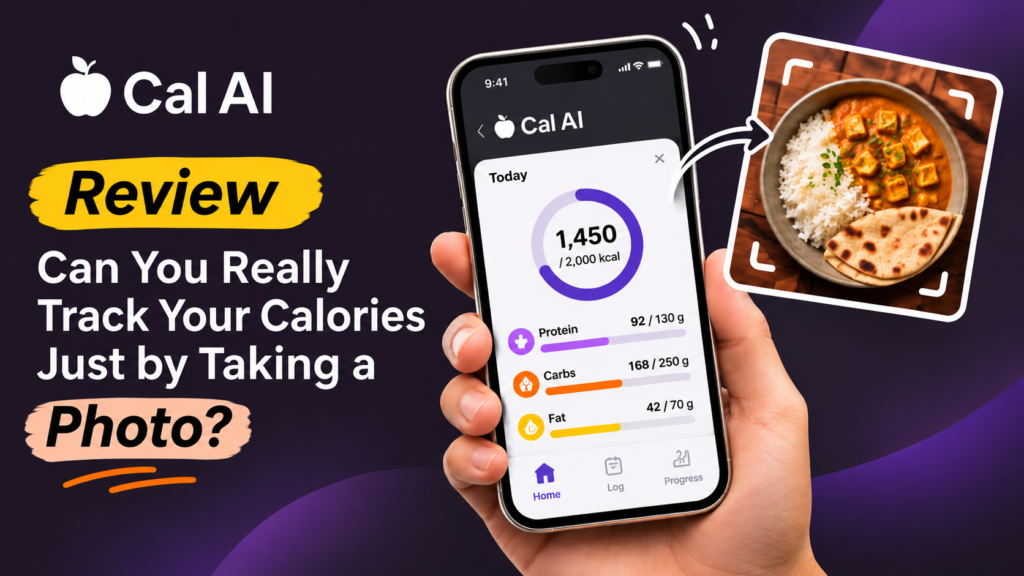
Counting calories has always been one of the most boring parts of trying to get fit. You have to remember everything you’ve eaten, estimate portion sizes, search for individual food items, and manually enter their nutritional values into an app. Even if you’re serious about losing weight or building muscle, keeping track of everything you eat can quickly become a chore.
That’s exactly the problem Cal AI is trying to solve.
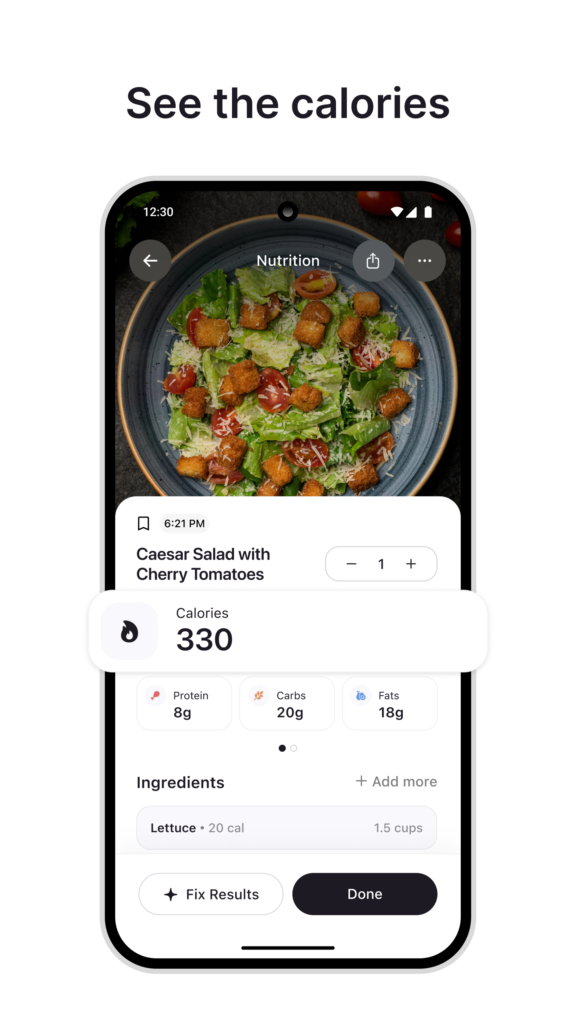
Cal AI is an AI-powered calorie-tracking app that lets you track your food simply by taking a photograph of your meal. Instead of manually entering every ingredient, you take a picture, and the AI identifies the food, estimates the portion size, and calculates the calories, protein, carbohydrates, and fats. You can also scan barcodes or describe your meals using text. What makes this interesting is that it turns something that normally takes several minutes into a process that takes just a few seconds.
But can AI really understand what’s on your plate accurately enough to replace traditional calorie tracking? That’s what makes Cal AI worth looking at.
What Exactly Is Cal AI?
Cal AI is essentially a personal nutrition tracker that uses artificial intelligence to make calorie counting easier. The app asks about your body measurements, activity levels and fitness goals before helping you track your daily food intake. Once your profile is set up, you can start logging meals by taking photographs rather than manually searching through food databases.
It’s technology uses your phone’s camera and depth sensor to estimate food volume before its AI analyzes the meal. It then provides an estimated nutritional breakdown, including total calories, protein, carbohydrates and fats. The app also has a database of more than one million foods, barcode scanning, custom food entries, and options to track water intake and exercise.
I particularly like the idea behind this approach because most people don’t struggle with understanding why nutrition matters. They struggle with consistently tracking it. Cal AI is trying to remove that friction and make nutrition tracking something you can do throughout the day without constantly opening a spreadsheet or searching through hundreds of food entries.
Use my Cal AI referral code SYKBWS to get a free trial and 20% off.
How Does Cal AI Actually Work?
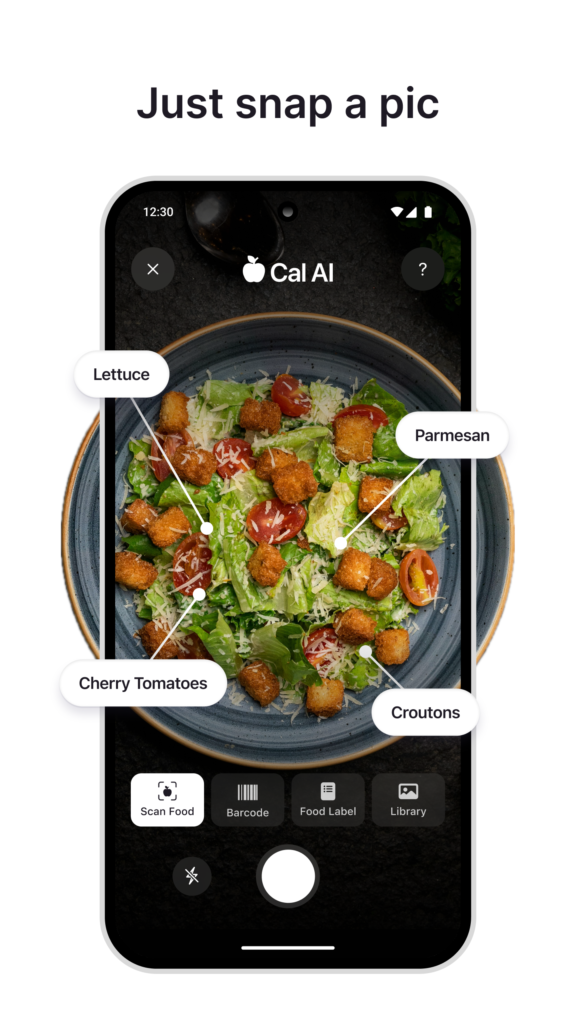
The interesting part is how simple the process is. You open Cal AI, take a picture of your food, and the app analyses what’s on your plate. It identifies the different food items, estimates their quantities and generates a nutritional breakdown. You can then review the results and make corrections where necessary.
For example, imagine you’ve just ordered a meal containing rice, dal, paneer and a few rotis. Normally, you’d have to search for each food item individually and estimate how much you ate. With Cal AI, you can photograph the entire meal and let the AI do the initial analysis. You can also scan packaged food barcodes or search for specific items if you don’t want to use the camera.
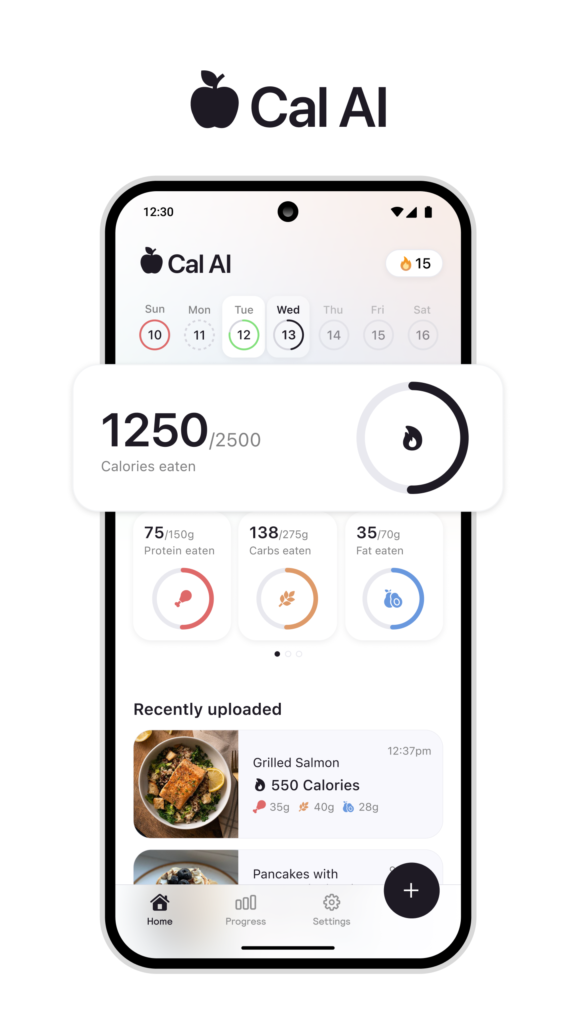
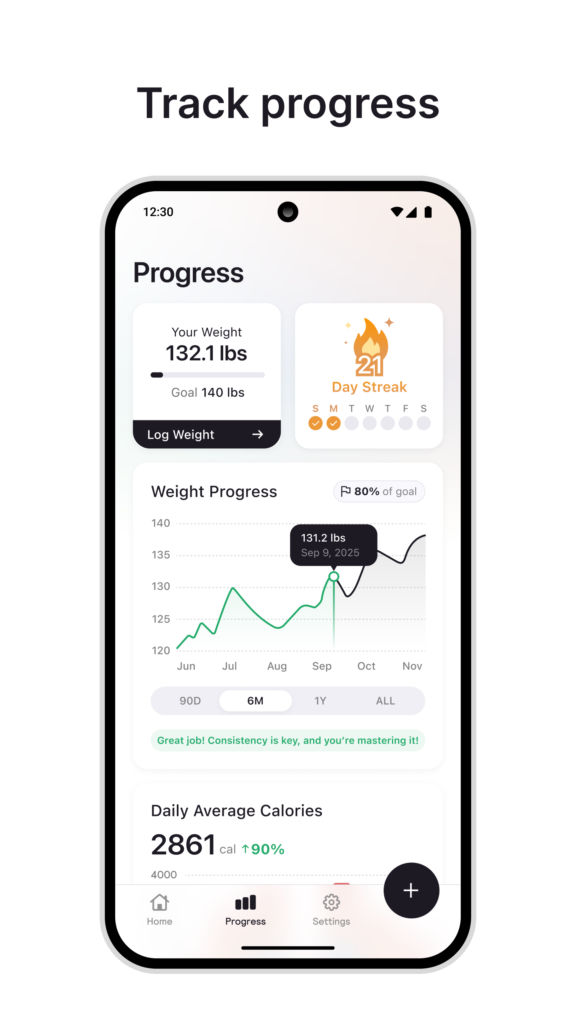
The app also gives you a broader view of your nutrition throughout the day. You can monitor your calorie intake, macros, weight and progress toward your goals. This makes it more than just a photo-based calorie counter; it’s designed to become a daily nutrition-tracking platform.
The Biggest Advantage: You Don’t Have to Manually Track Everything
I think this is where Cal AI has the strongest product proposition. Traditional calorie-tracking apps can be incredibly detailed, but that detail often comes at the cost of convenience. You have to enter everything you eat, find the correct food entry, adjust the portion size and repeat the entire process for your next meal.
And this is exactly why people stop tracking their food after a few days.
Cal AI makes the process considerably easier by allowing you to log an entire meal with one photograph. For people who eat several times a day, that convenience can make a real difference in maintaining consistency. You spend less time entering information and more time actually understanding your eating habits.
It is particularly interesting for people who are trying to lose weight, build muscle or simply become more conscious of their daily protein and calorie intake. Instead of guessing whether you’re eating enough protein or exceeding your calorie target, you have a place to monitor your estimated intake.
But How Accurate Is Cal AI?
This is probably the most important question, and I wouldn’t recommend treating any AI calorie tracker as a completely accurate nutritional measurement tool.
Cal AI itself says that its food recognition is approximately 80% accurate, while also acknowledging that lighting, food visibility and portion estimation can affect the results. More importantly, preliminary research presented by US National Institutes of Health researchers at NUTRITION 2026 tested four photo-based calorie-tracking apps, including Cal AI, against 102 carefully weighed meals. The apps underestimated calories by approximately 250–345 calories per meal on average. These were preliminary conference findings rather than a peer-reviewed journal study, but they highlight an important limitation of estimating nutrition from photographs.
The problem becomes particularly relevant with mixed dishes and home-cooked meals. Take Indian food, for example. A photograph might identify your paneer curry, rice and roti correctly, but it cannot necessarily know how much oil, ghee, butter or cream went into preparing them. Two plates that look almost identical can have very different calorie counts.
That’s why I’d treat Cal AI as a convenient estimation tool rather than a replacement for accurately weighing food. You should review portion estimates, correct ingredients where necessary and use nutritional labels or weighed quantities when precision matters.
Use my Cal AI referral code SYKBWS to get a free trial and 20% off.
Is Cal AI Worth It?
I think Cal AI is an interesting product because it addresses one of the biggest problems with nutrition tracking: consistency. You can have the best calorie-tracking system in the world, but it isn’t particularly useful when you stop logging your meals after three days because the process becomes too time-consuming.
The photo-based approach makes tracking considerably more accessible, especially for people who don’t want to spend their entire day entering food manually. The barcode scanner, food database, macro tracking and progress monitoring also make it more complete than a basic AI image-recognition tool.
However, there are a couple of things to consider. Food scanning requires a subscription, and the app collects personal information related to your diet, activity, body measurements and fitness goals, so it’s worth reviewing its privacy policy before signing up. Also, AI-generated nutritional estimates shouldn’t be used as the sole basis for medical or dietary decisions.
If you’re someone who already tracks every meal using a weighing scale and a detailed nutrition database, Cal AI might not offer enough additional accuracy to justify switching. But if the biggest reason you don’t track calories is that the process feels tedious, that’s where I think it makes the most sense.
My Verdict
What makes Cal AI interesting isn’t necessarily the AI technology itself. It’s the way the company has used that technology to simplify an activity that millions of people find frustrating.
For years, calorie tracking has required you to manually enter almost everything you eat. Cal AI is trying to change that by making the camera the primary input method. You take a picture, review the nutritional breakdown and keep moving with your day.
I wouldn’t blindly trust every calorie estimate it generates, especially with Indian home-cooked meals where cooking oil and portion sizes can make a significant difference. But as a tool to build better awareness of what you’re eating and make daily nutrition tracking easier, I think the concept has a lot of potential.
Ultimately, Cal AI makes the most sense for someone who wants to understand their calorie and protein intake without spending too much time manually tracking every meal.
Get a Free Trial and 20% Off on Cal AI
This is where I think the answer becomes more personal.
If you’re planning to try Cal AI, I’ve got a referral offer for my readers. Use my Cal AI referral code SYKBWS to get a free trial and 20% off.
Referral Code: SYKBWS
You can download Cal AI and start tracking your meals using the official Cal AI website. Make sure you enter the referral code during sign-up, as the company says missed referral codes cannot be applied retroactively.
Final Thoughts
I think we’re moving toward a future where tracking our health and nutrition will require significantly less manual effort. Smartwatches already measure our activity, smart rings track our recovery, and now AI is making it easier to understand what we’re eating.
Cal AI is a good example of how a relatively simple application of AI can solve a problem that people have been dealing with for years. It might not get every calorie or portion size right, but it makes the process of being more conscious about nutrition considerably easier.
And sometimes, making a healthy habit easier to follow is just as important as having the most advanced technology behind it.